

On November 19, Anthropic — the company behind Claude and one of OpenAI’s strongest competitors — is expected to arrive on Nasdaq under the ticker ANT. The prospectus puts the offering at 825 million shares, potentially worth $64.35 billion at the top of the indicated range.
And Wall Street seems eager. According to a Bloomberg report, the deal is already about six times oversubscribed. A separate $26 billion private placement involving major technology backers could take the combined fundraising to roughly $90 billion, although that total should not be confused with proceeds from the public offering alone.
It is tempting to look at those numbers and conclude that November 19 will be a spectacular day for buyers. It may well be a spectacular day for the stock. Those are not necessarily the same thing.
An extraordinary growth story — at an extraordinary price
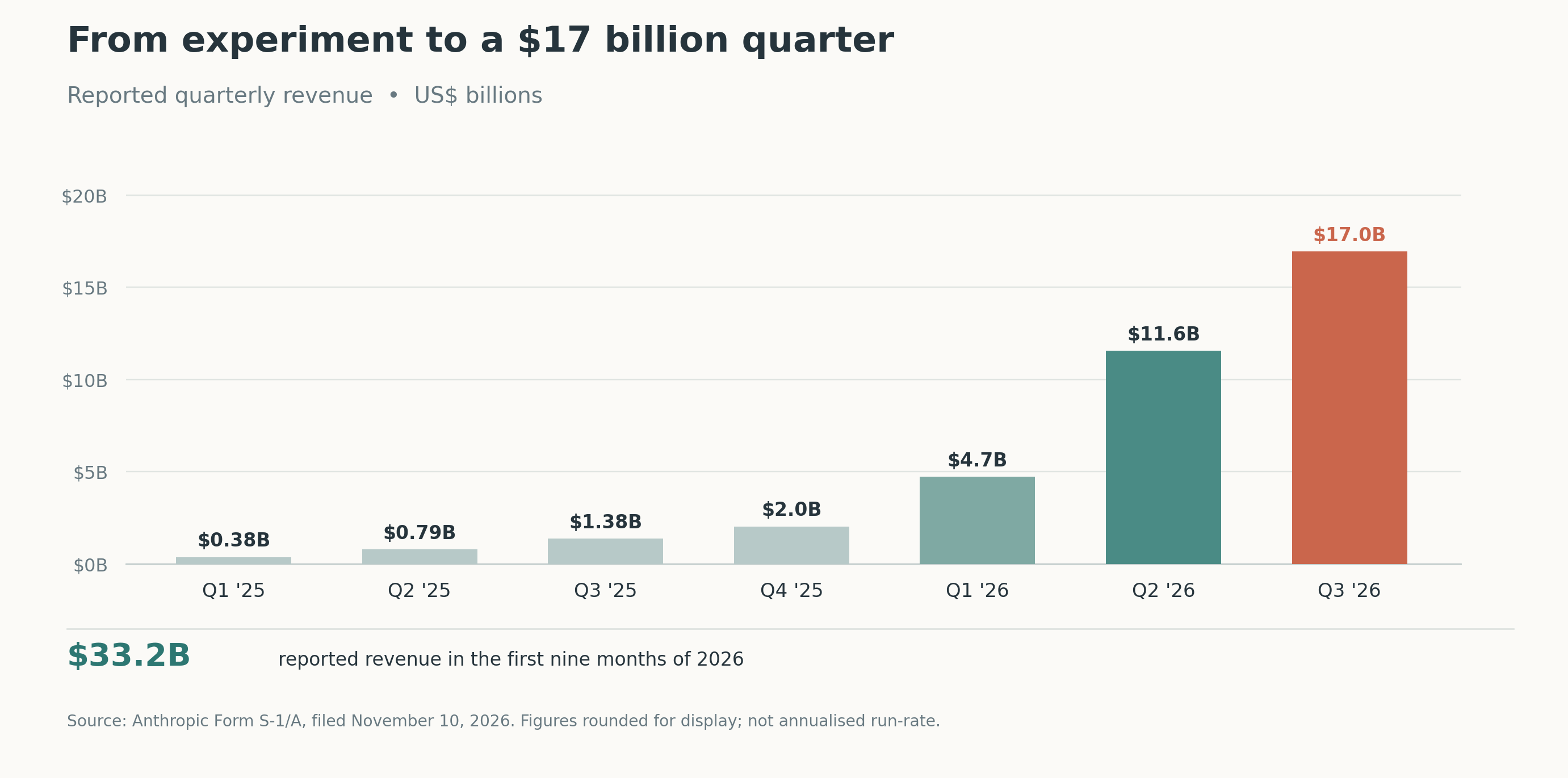
Anthropic reported $33.2 billion in revenue in the first nine months of 2026, up from $2.5 billion in the same period a year earlier. Third-quarter revenue alone approached $17 billion. By October, the company’s reported annualised run rate had reached about $81 billion. It is not the same as revenue already earned: it extrapolates a recent period of activity. That detail becomes crucial when investors start building trillion-dollar valuations on future growth.
Claude is becoming embedded in enterprise software, coding, research and increasingly complex workflows. That is potentially a more durable business than a consumer chatbot whose users can switch providers with a click.
But the stock market has a habit of converting excellent long-term stories into questionable short-term entry prices.
SpaceX: a reminder that IPO hype doesn’t last forever
SpaceX offers a useful real-world example of how quickly IPO enthusiasm can turn into a valuation reset.
Its shares were offered at $135, reached a closing high of $211.39 on June 16, then slid to a closing low of $108.27 on August 5: a 48.8% closing-price drawdown.
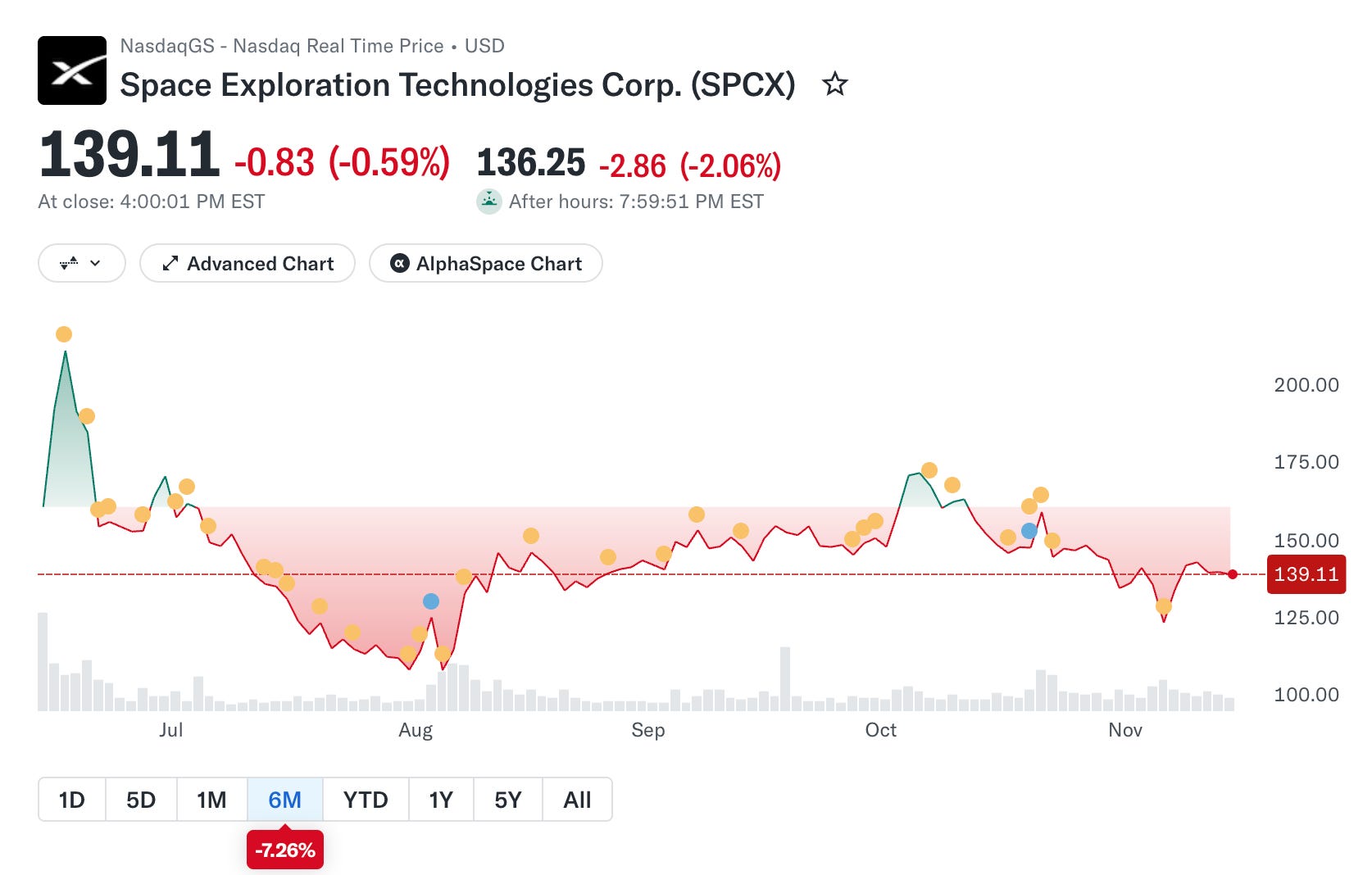
The interesting part is that the market didn’t need to decide SpaceX was suddenly a bad company. Investors simply became less willing to pay the premium they had assigned during the initial excitement.
Strong institutional demand, an oversubscribed IPO and an extraordinary business story might drive an impressive debut, but none of these guarantees that the opening price represents an attractive long-term entry point.
But there’s another interesting twist to Anthropic’s IPO.
Anthropic’s anticipated debut comes just two days after Nvidia’s November 17 earnings report, amid a major leadership shake-up at the chipmaker.
The timing is particularly interesting. Nvidia’s results could set the tone for the broader AI market, either reigniting investor enthusiasm or raising fresh concerns about the sustainability of the AI boom.
There’s a deeper connection between Anthropic and Nvidia — one that could have important implications for both companies’ long-term valuations.
And it’s something I think investors may be overlooking.