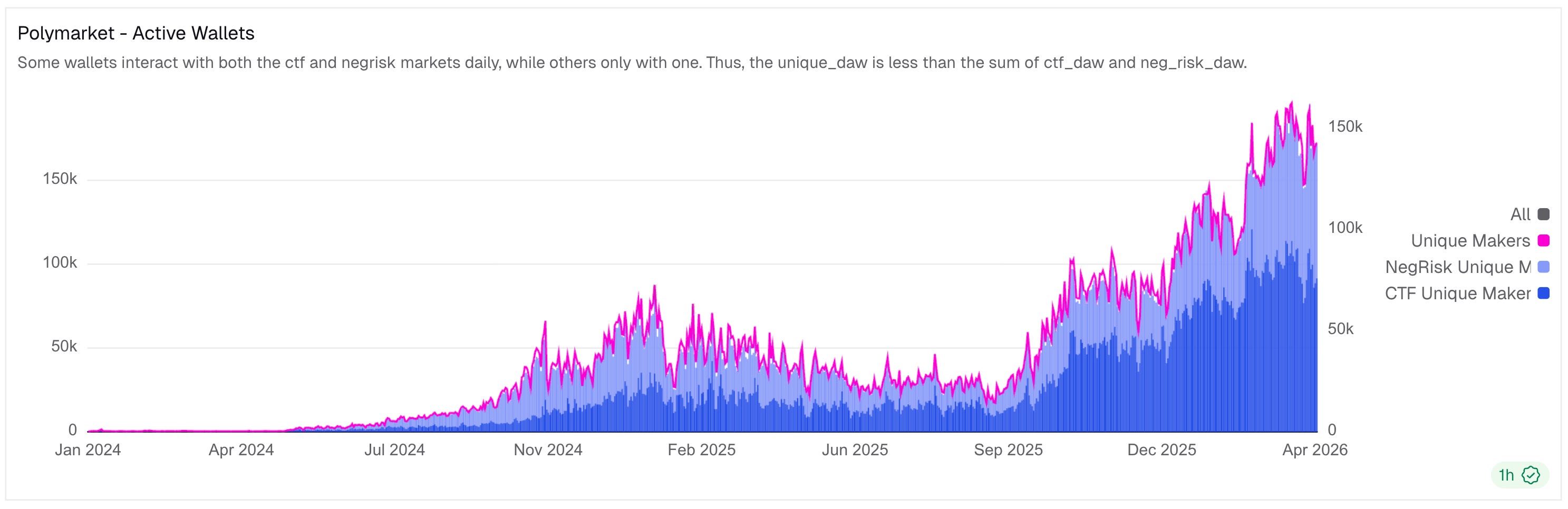
Prediction markets are now getting as much social attention as traditional investing. Polymarket alone processed over $10 billion in a single month in early 2026, surpassing total 2024 volumes in just 30 days. Daily active wallets have grown from near-zero to 150,000+ in under two years. The story this piece investigates is not the growth. It is what the data underneath that growth reveals about how information moves through markets.
In some big moments, prediction markets are starting to rival the speed, conviction, and real-money action you see in traditional investing. People are putting serious skin in the game on elections, economic data, company news, and more.
Today, I want to share what I’ve found by digging into that data — the interesting patterns, the smart money moves, and the quiet signals that more and more traditional investors are starting to pay attention to.
The Reframing
Most traders think of prediction markets as curiosities — binary gambles dressed in the language of probability. That framing is precisely backwards, and the mispricing it creates is structural. Prediction markets are, in fact, the most direct instrument ever devised for observing the price of private information in real time.
Not corporate earnings surprises, not central bank pivots — those are secondary. The primary signal lives in the gap between where an event contract should trade given all public information, and where it actually trades in the hours before resolution.
The academic literature calls this informed trading. In practice, it produces a specific, reproducible pattern in price action: a quiet directional accumulation at a price implying a wildly different probability than the consensus, concentrated in the final window before news breaks, executed without hedging. That pattern is not noise. It is signal — and it appears across geopolitical events, corporate product launches, macroeconomic data releases, and personal announcements.
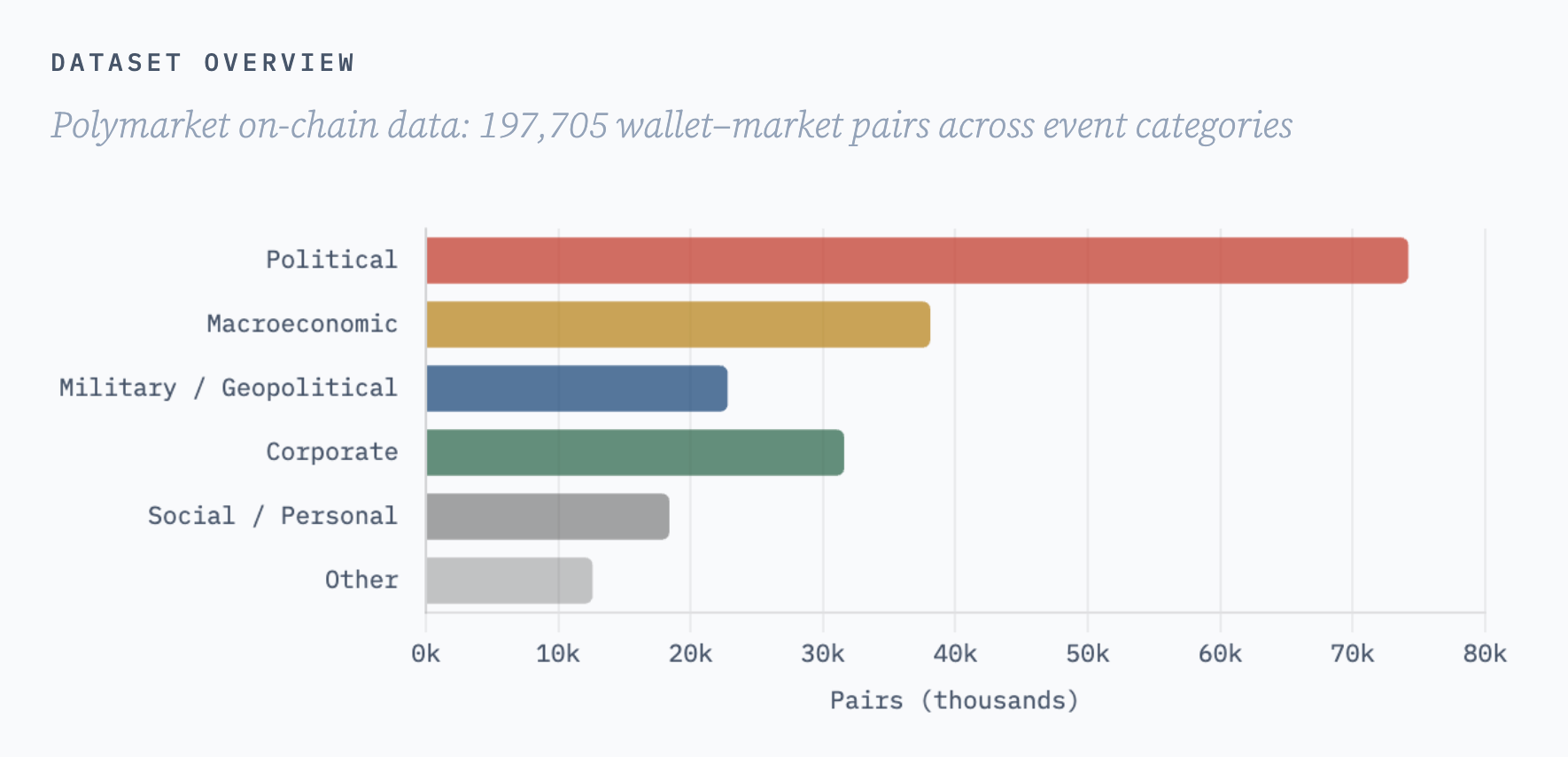
The question for the analytically serious practitioner is not whether informed trading exists. The empirical record across 197,705 resolved wallet–market pairs on Polymarket (February 2024–February 2026) is now unambiguous. The question is: what structural features of prediction markets make this signal legible, and how can a practitioner extract a repeatable edge from it?