

AI can be right and still leave portfolios overexposed. Gold becomes useful when the market has already spent too much risk budget on the perfect version of the growth story.
Gold is rallying because the market has left itself very little room to be wrong.
That is the useful signal. A normal gold rally can be a fear trade. This one is more interesting because it is happening while investors remain committed to the growth story. The risk is concentration, not simply optimism.
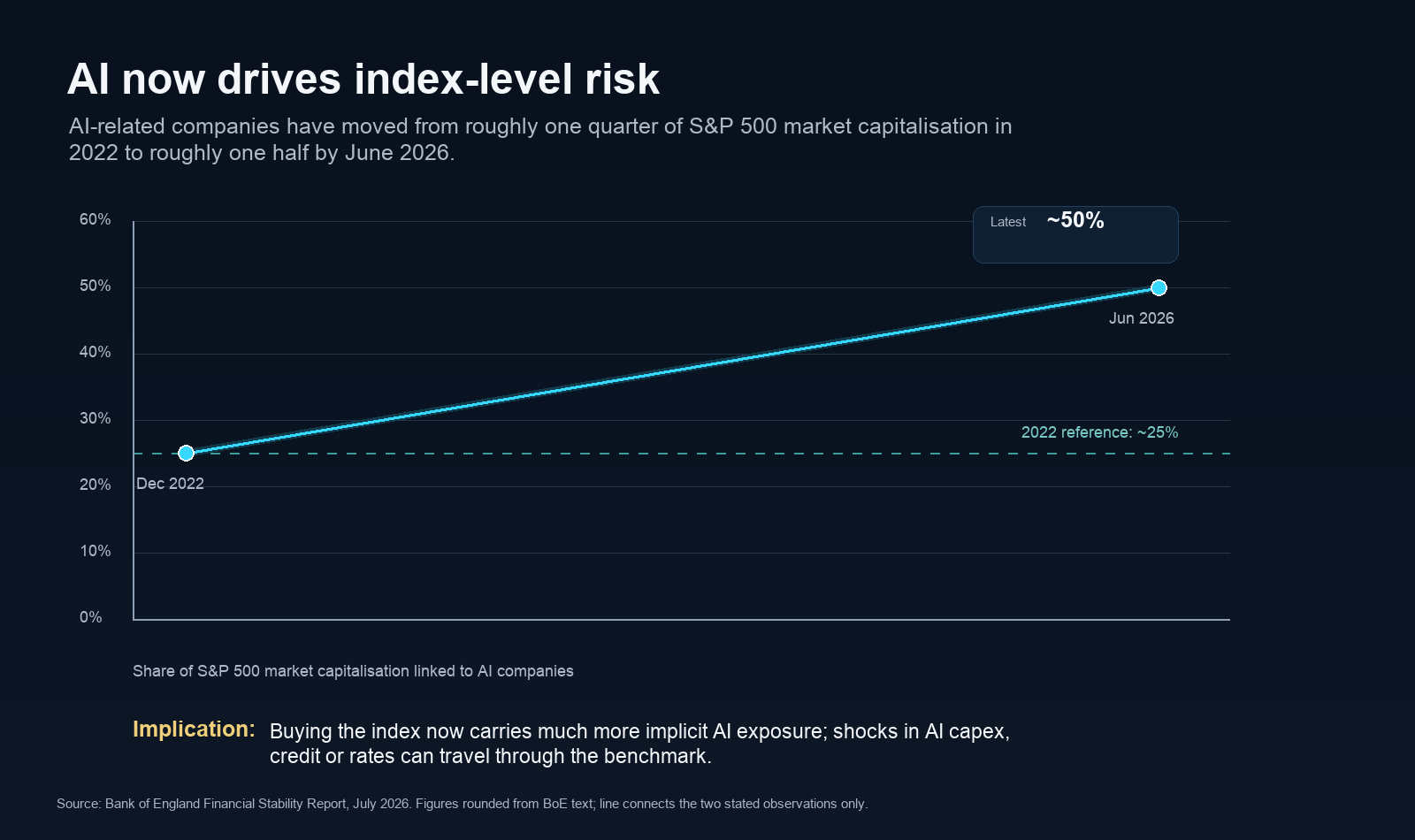
The Bank of England’s July Financial Stability Report says AI-related companies now account for around half of S&P 500 market capitalisation, up from around a quarter in 2022. The Philadelphia Semiconductor Index was up 97% since the start of the year at the time of the report. BofA’s July fund manager survey also found long global semiconductors to be the world’s most crowded trade.
That does not make AI a bad theme. It means the index has less diversification than it appears to have. A wobble in AI capex, credit conditions, real rates, energy prices, or Fed credibility can travel through the whole benchmark.
Gold settled at $4,340.70 on Friday, August 7, its best week since January, after falling to a 2026 low near $3,985.60 in mid-July. The timing matters more than the level. Gold is rising at the moment when the equity market has become most dependent on a narrow version of good news.
So we ask the natural and simple question. If portfolios are already long AI, where does capital go when the growth story needs a hedge?