

For most of our adult lives, the world operated under a familiar economic logic.
Goods became cheaper.
Technology improved efficiency.
Global trade expanded.
Interest rates trended lower.
It felt permanent because it lasted for decades.
From the 1990s through the early 2020s, the global economy benefited from an extraordinary combination of disinflationary forces. China entered global trade at scale. Companies moved production to lower-cost regions. Supply chains became leaner. Technology improved productivity. Capital became cheaper.
Consumers received more for less.
A better smartphone at a lower price.
Cheaper clothing.
Affordable electronics.
Faster delivery.
More choice.
For investors, the same environment created a remarkably durable playbook. Falling inflation supported lower interest rates. Lower rates lifted asset valuations. Globalisation protected margins. Cheap capital encouraged leverage and expansion.
That world is beginning to look increasingly historical.
The forces that drove prices lower for 30 years are weakening, and several of them are moving in reverse.
So will we be returning to the old regime at all?
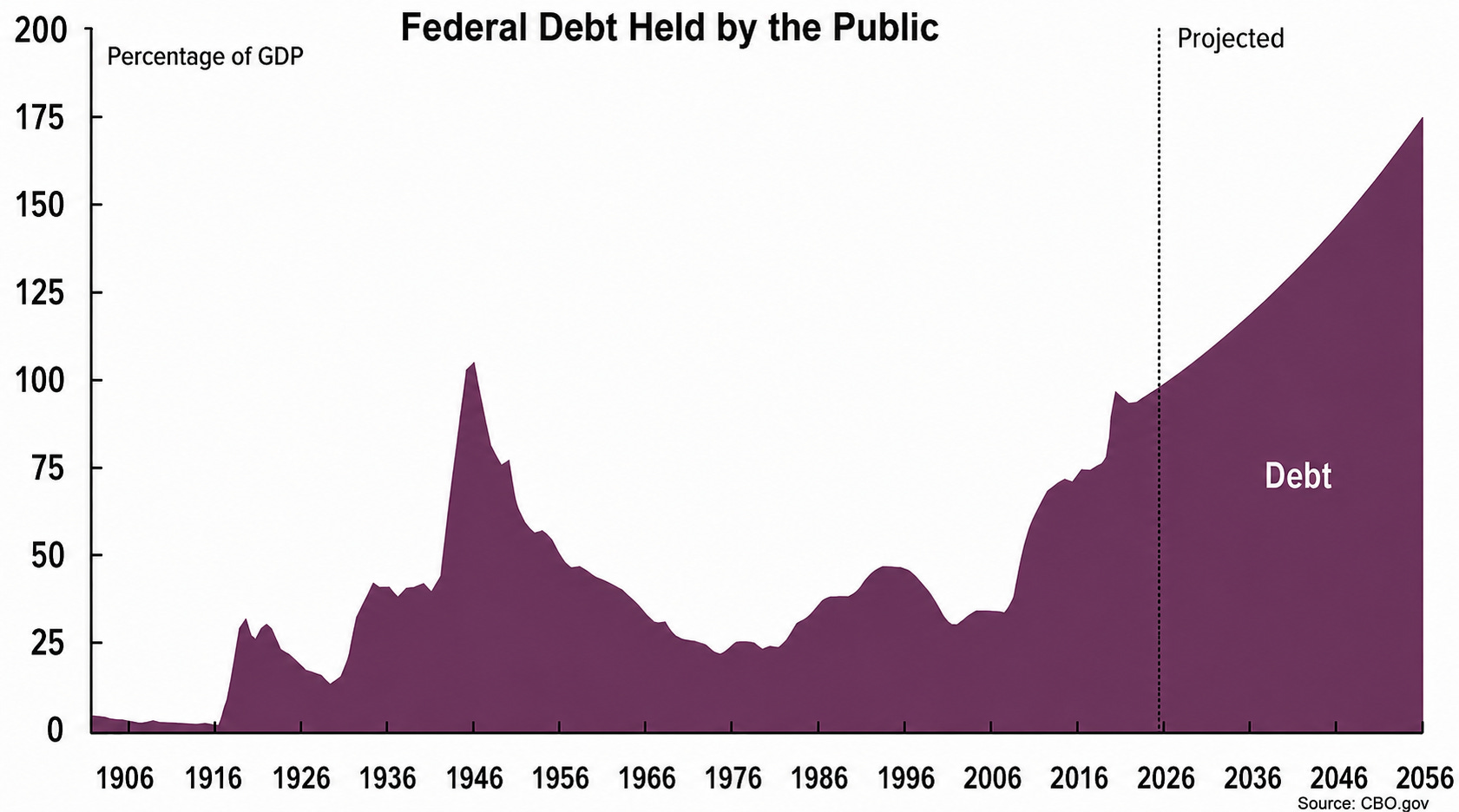
Because if the structure of the economy has changed, the investment strategies built for the previous 30 years may become less reliable in the next 30.
The End of the Disinflation Era
Veteran macroeconomist Lacy Hunt has spent decades studying debt, inflation and long-term economic cycles. One of the most important ideas in his work is that the previous few decades were unusually favourable.
The integration of China into global trade created one of the strongest disinflationary forces in modern economic history.
Companies gained access to vast pools of lower-cost labour. Manufacturing migrated toward regions where production could be done more cheaply. Shipping networks became more efficient. Inventory systems became leaner. Global supply chains were optimised around cost.
For years, the direction of travel was clear.
Produce where it is cheapest.
Source globally.
Hold less inventory.
Use scale to drive costs down.
That model worked exceptionally well while the geopolitical environment remained stable.
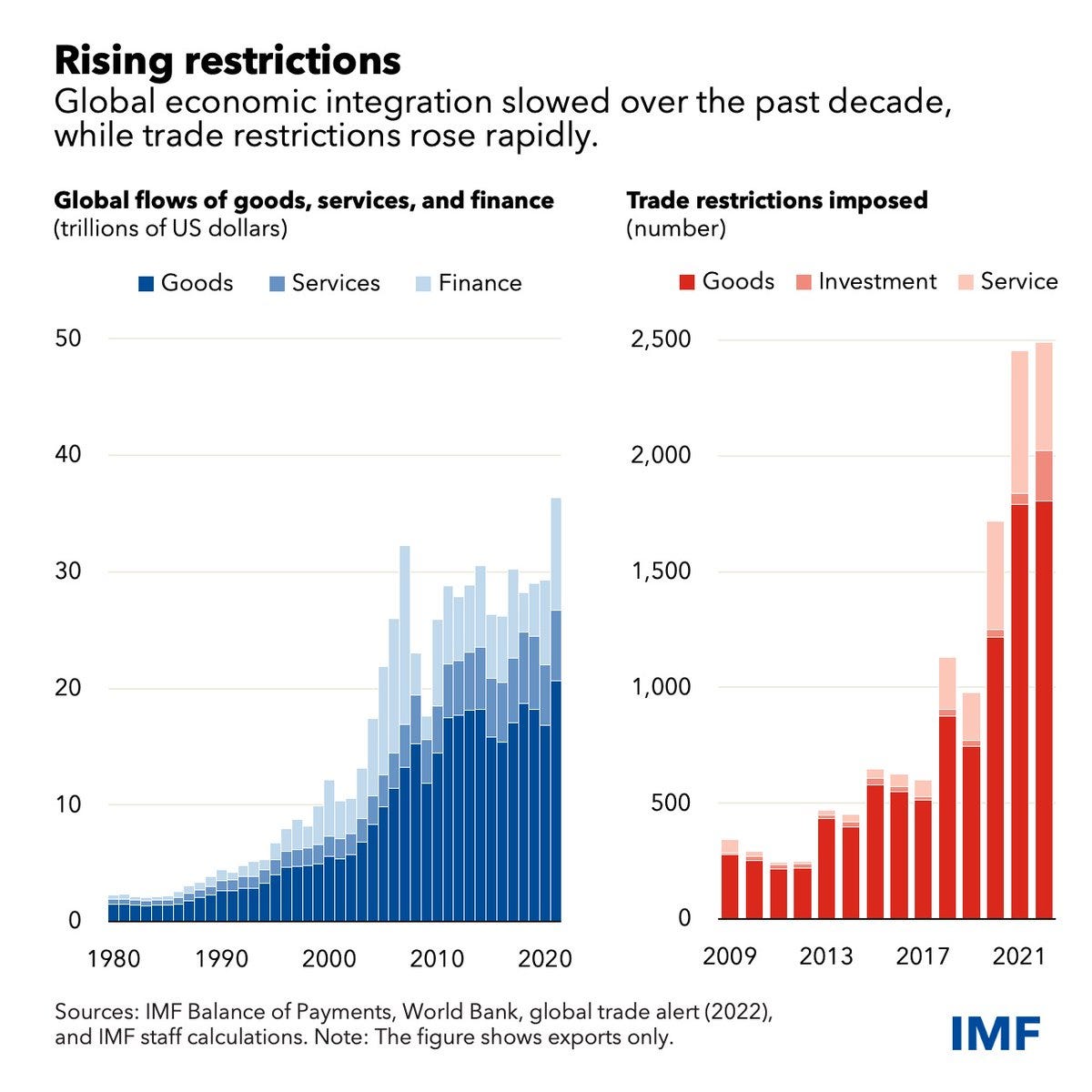
Now stability can no longer be assumed.
Governments and corporations are reassessing how much risk they are willing to tolerate in exchange for lower production costs. Supply chains built around maximum efficiency are being redesigned around security, redundancy and strategic control
That shift has consequences.
A factory moved closer to home usually means higher wages.
A second supplier adds resilience, but also cost.
Larger inventories improve security, yet they tie up more capital.
New domestic production requires years of investment in infrastructure, labour and energy.
The old system minimised cost.
The emerging system pays more for resilience.
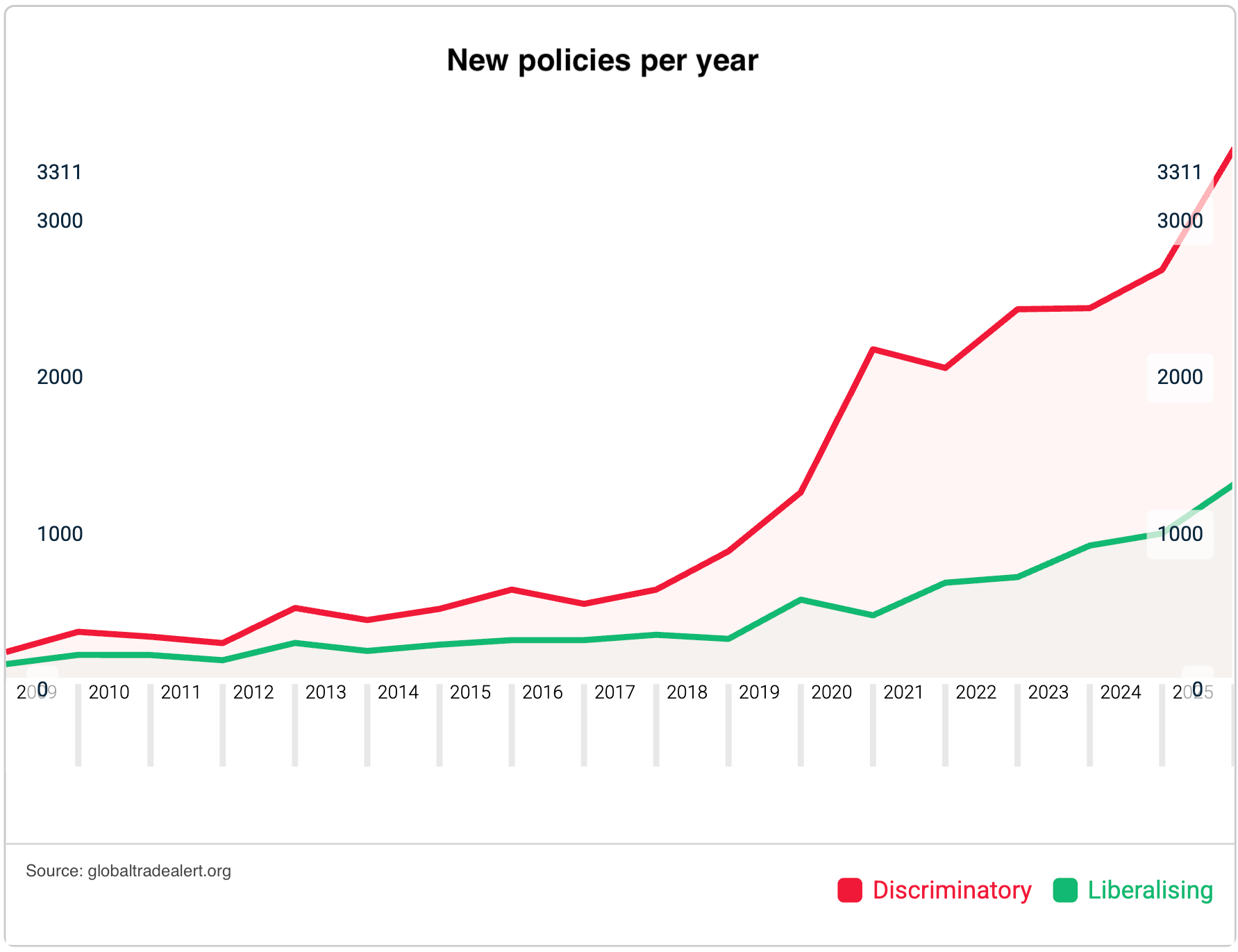
That is one of the clearest reasons inflation may prove more persistent than many investors expect.
The AI Paradox: A Digital Revolution Built on Physical Infrastructure
Artificial intelligence is often presented as the counterargument.
If AI can automate work, improve productivity and reduce inefficiency, surely technology will once again push costs lower.
Over time, that may well happen.
The near-term picture is more complicated.
The AI boom is extraordinarily physical.
Every large model depends on advanced chips. Those chips depend on specialised manufacturing facilities. Data centres require enormous quantities of electricity. Electricity demand requires grid investment. Cooling systems, transformers, copper, industrial equipment and construction all sit behind what appears to the end user as a purely digital product.
The front end is software.
The economic foundation is infrastructure.
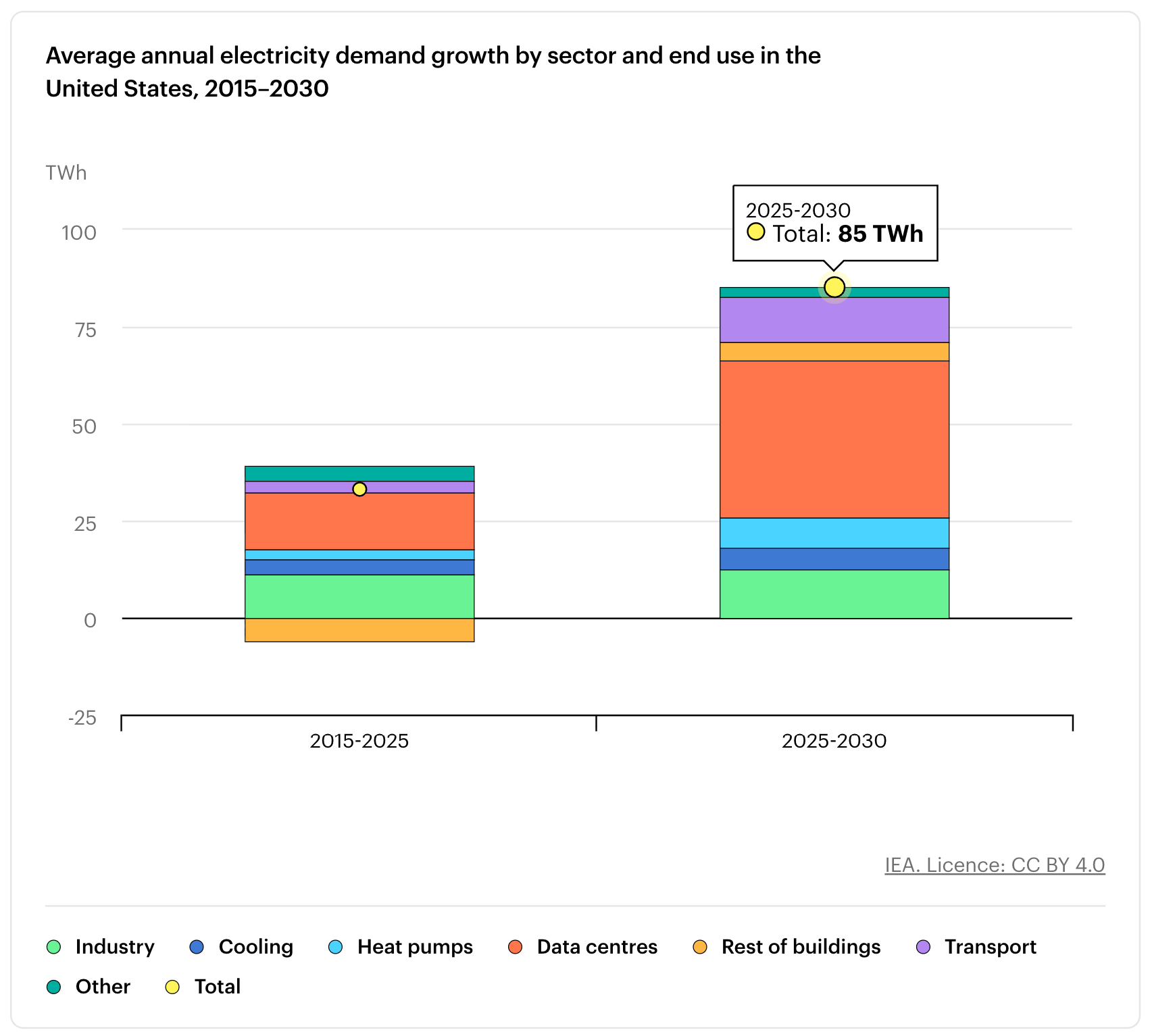
This matters because the spending is happening now, while much of the productivity benefit may arrive later.
The transition therefore creates an unusual dynamic: a technology associated with future efficiency is currently intensifying demand for scarce real-world resources.
That can support higher capital expenditure, stronger commodity demand and additional pressure on energy systems.
The AI story may eventually become deflationary. However, its build-out phase is highly capital-intensive.
The Debt Problem Is Becoming Harder to Ignore
The next structural shift sits in government balance sheets.
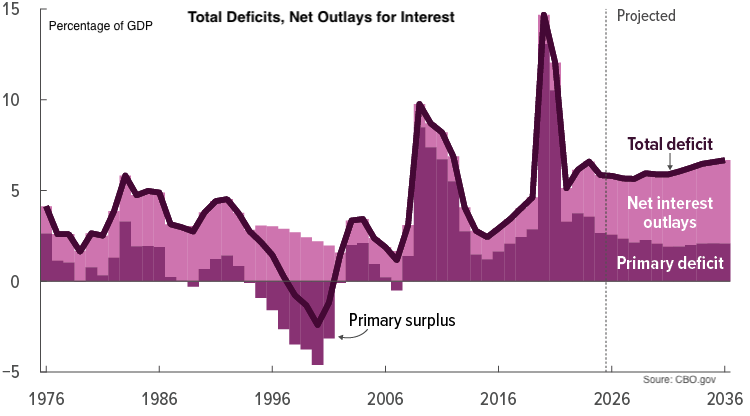
The United States is running very large fiscal deficits even outside a recession or major war.
That changes the macro backdrop because interest expense itself becomes a growing source of pressure.
As debt rises, the government becomes more sensitive to interest rates.
As rates remain elevated, refinancing costs increase.
As financing costs increase, fiscal flexibility narrows.
This creates a system where debt management becomes increasingly intertwined with monetary policy, market liquidity and financial stability.
The size of the deficit matters.
The cost of servicing it matters even more.
A heavily indebted economy can function for a long time, especially when the underlying currency remains globally important. Yet the margin for error becomes smaller as debt service absorbs a growing share of national resources.
Investors therefore have to watch a broader set of variables than they did in the low-rate era.
Growth still matters. Inflation still matters.
But fiscal credibility, debt issuance and the long-term purchasing power of currency matter more than they used to.
The K-Shaped Economy: Why the Same Inflation Feels Different to Different People
One of the defining features of the current environment is the widening gap between asset owners and everyone else.
Inflation does not hit every household equally.
People who own equities, property, businesses or scarce assets can benefit when nominal asset prices rise.
People who hold most of their wealth in cash and wages face a different experience.
Their bank balance may remain stable while the cost of living moves higher.
That creates a K-shaped economy. The top branch benefits from asset ownership. The lower branch absorbs the rising cost of everyday life.
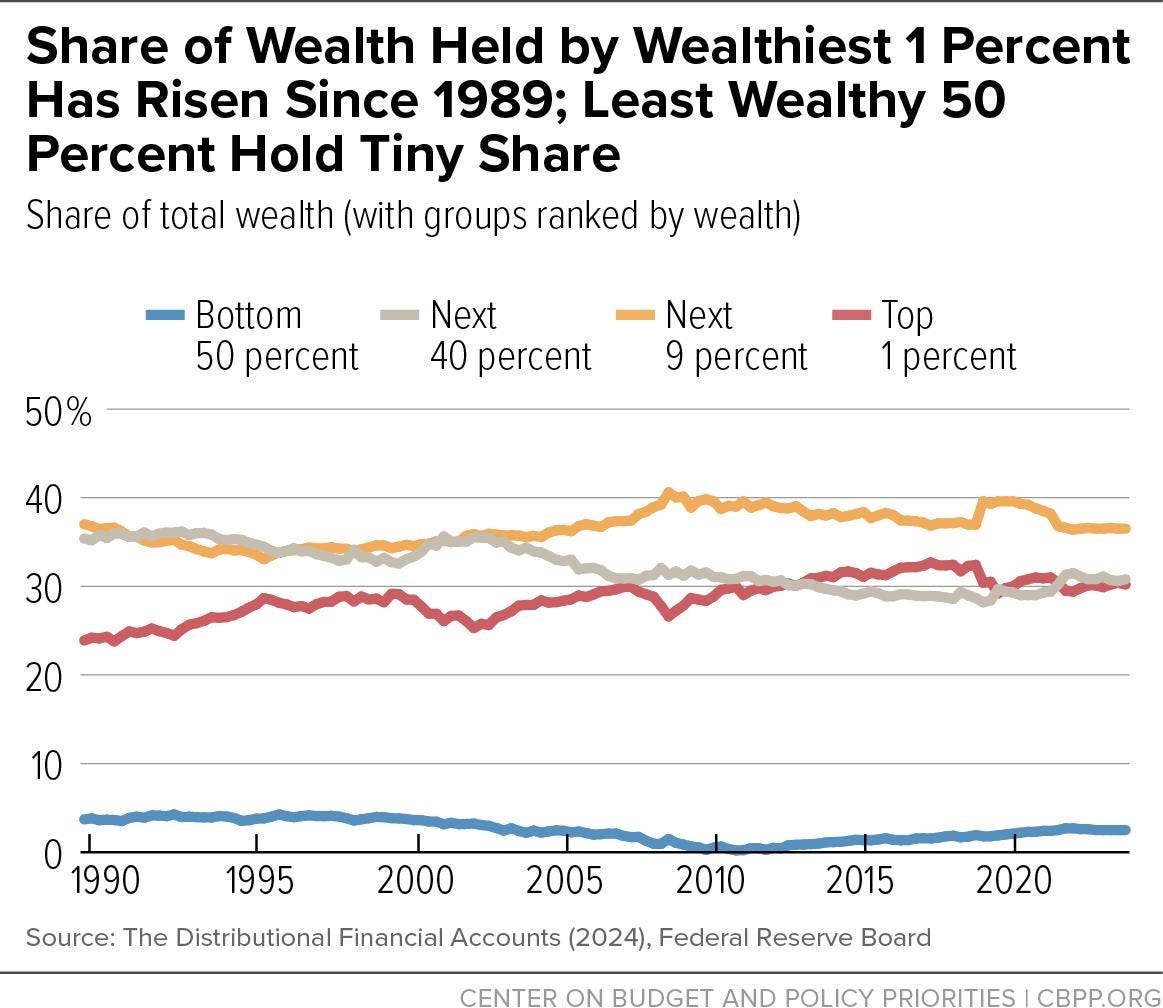
This is one reason financial markets can look strong while many households still feel poorer.
The stock market can rise. Property values can rise. Nominal wages can rise.
And purchasing power can still decline. Inflation works quietly.
It does not announce itself as a tax.
It simply reduces what each unit of money can buy over time.
That is why understanding the monetary regime matters far beyond macroeconomic theory. It changes how people should think about savings, portfolio construction and wealth preservation.
The Investment Playbook for a Different Monetary Regime
Up to this point, the argument is macroeconomic.
The more interesting question begins here.
What does this environment imply for investors?
If globalisation is becoming more expensive, AI is increasing physical capital demand, fiscal deficits remain large and inflation erodes purchasing power unevenly, then the traditional definition of “safe” starts to shift.
Cash looks stable in nominal terms.
Bonds can provide income.
Equities still benefit from growth.
Yet each of these assets behaves differently once inflation, fiscal pressure and currency debasement become more persistent features of the system.
The central idea is simple:
When the regime changes, the meaning of safety changes with it.
When Cash Stops Feeling Safe
Cash feels safe because its nominal value does not move.
$100,000 remains $100,000.
The problem appears when we measure wealth in terms of what that money can actually buy.
If inflation runs at 4%, purchasing power falls by roughly 18% over five years.
At 6%, the erosion is much faster.
This is the distinction between nominal wealth and real wealth.
Nominal wealth asks: “How much money do I have?”
Real wealth asks: ”What can that money buy?”
In a low-inflation environment, the difference is easy to ignore.
In a persistent inflation regime, however, it becomes central.
This does not make cash useless. Liquidity has enormous value. Cash provides optionality, stability and the ability to act when opportunities appear.
But investors need to stop treating a stable number in a bank account as the same thing as stable purchasing power.
Those are two different concepts.
Why Scarcity Matters More When Financial Claims Expand
Modern economies can create financial claims very quickly.
Governments issue debt. Banks create credit. Central banks expand their balance sheets. Companies issue securities.
The supply of financial assets can grow rapidly.
Physical scarcity moves at a different speed.
A new copper mine can take years to develop.
Energy infrastructure takes time to build.
Gold production expands slowly.
Industrial capacity cannot appear overnight.
And all of this creates an important asymmetry. Financial claims can expand much faster than the supply of scarce real assets.
When that happens, the relative value of scarcity rises.
This is one reason real assets tend to attract attention during periods of persistent inflation, fiscal expansion and monetary uncertainty.
The logic is straightforward.
If the denominator is weakening, scarce assets can reprice higher even without dramatic changes in their underlying physical characteristics.
Monetary Insurance in a Fiat World
I have written before about gold as monetary insurance: scarce, liquid, globally recognised and free of issuer risk. That case still stands.
What is more interesting now is that the market is beginning to behave differently from the framework investors have relied on for years.
Historically, gold and real yields had a fairly intuitive relationship. When inflation-adjusted bond yields fell, the opportunity cost of holding gold declined and the metal usually benefited. When real yields rose, gold often struggled.
That relationship has weakened.
Why? Demand function for gold is broadening.
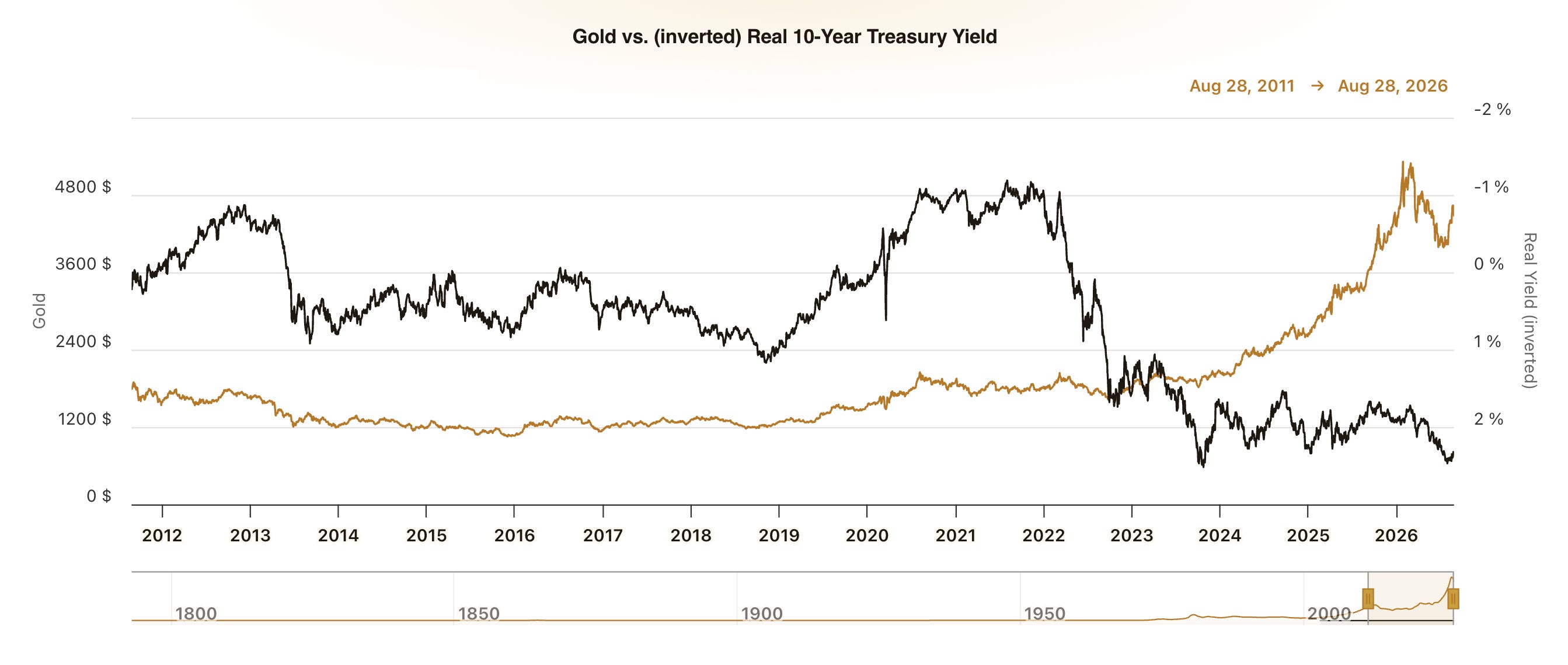
Real yields still matter. But so do fiscal credibility, reserve diversification, geopolitical risk and central-bank demand. Gold is increasingly being priced not only against the return available on government bonds, but against confidence in the system those bonds represent.
That is a more consequential shift than another cyclical rally.
If gold can remain firm in an environment that would historically have been a headwind, the market may be telling us that investors are assigning more value to assets outside traditional financial claims.
Beyond the inflation, repricing is is also about trust, scarcity and the quality of the denominator.
The usual silver argument is also familiar: it has a monetary history like gold and an industrial use case tied to electronics, solar and electrification.
Silver can underperform for long stretches when investor demand is weak. But when monetary demand and industrial demand reinforce one another, the market can tighten quickly.
This is why I see silver less as a cheaper version of gold and more as a different expression of the same macro regime.
Gold is driven more directly by confidence in money and financial assets. Silver adds an additional sensitivity to the physical economy.
Real Assets Are Becoming Part of the Monetary Conversation
The investment case for real assets is broader than gold and silver.
Energy.
Industrial metals.
Infrastructure.
Commodity producers.
Real estate in the right locations.
Productive businesses with pricing power.
All of these assets interact differently with inflation. The common thread is that they are tied to something real.
Something scarce.
Something difficult to create instantly.
The economic regime appears to be shifting from an era dominated by abundance and efficiency toward one increasingly shaped by scarcity, resilience and capital intensity.
The previous 30 years rewarded investors for owning duration. The next 30 may reward investors more for owning scarcity.
The New Rules of Wealth Preservation
The old economic system was built around efficiency.
The old world benefited from cheap labour, cheap capital, abundant global supply and falling inflation.
The new world faces geopolitical fragmentation, higher fiscal deficits, energy constraints, capital-intensive technology and more competition for physical resources.
What retains value if the unit we measure wealth in keeps losing purchasing power?
It changes how you think about bonds.
It changes how you think about real assets.
The world has moved into a new phase.
The investment framework should move with it.
— Alina Khay
This is a research note and a record of my own market thinking, not investment advice or a personal recommendation. Nothing here considers your objectives, financial situation, or risk tolerance. Markets can move against this view; use your own judgment and seek professional advice where appropriate.