

In January, silver briefly traded above $120 an ounce before collapsing more than 25% in a single session - a reminder of how violently this market can move when physical tightness, speculative positioning and relatively shallow liquidity collide. Since then, attention has naturally shifted from scarcity to disappointment. Prices corrected, momentum disappeared and the spectacular part of the story seemed to be over. I think that may be the wrong way to look at what happened. The rally did something economically important: it discovered supply.
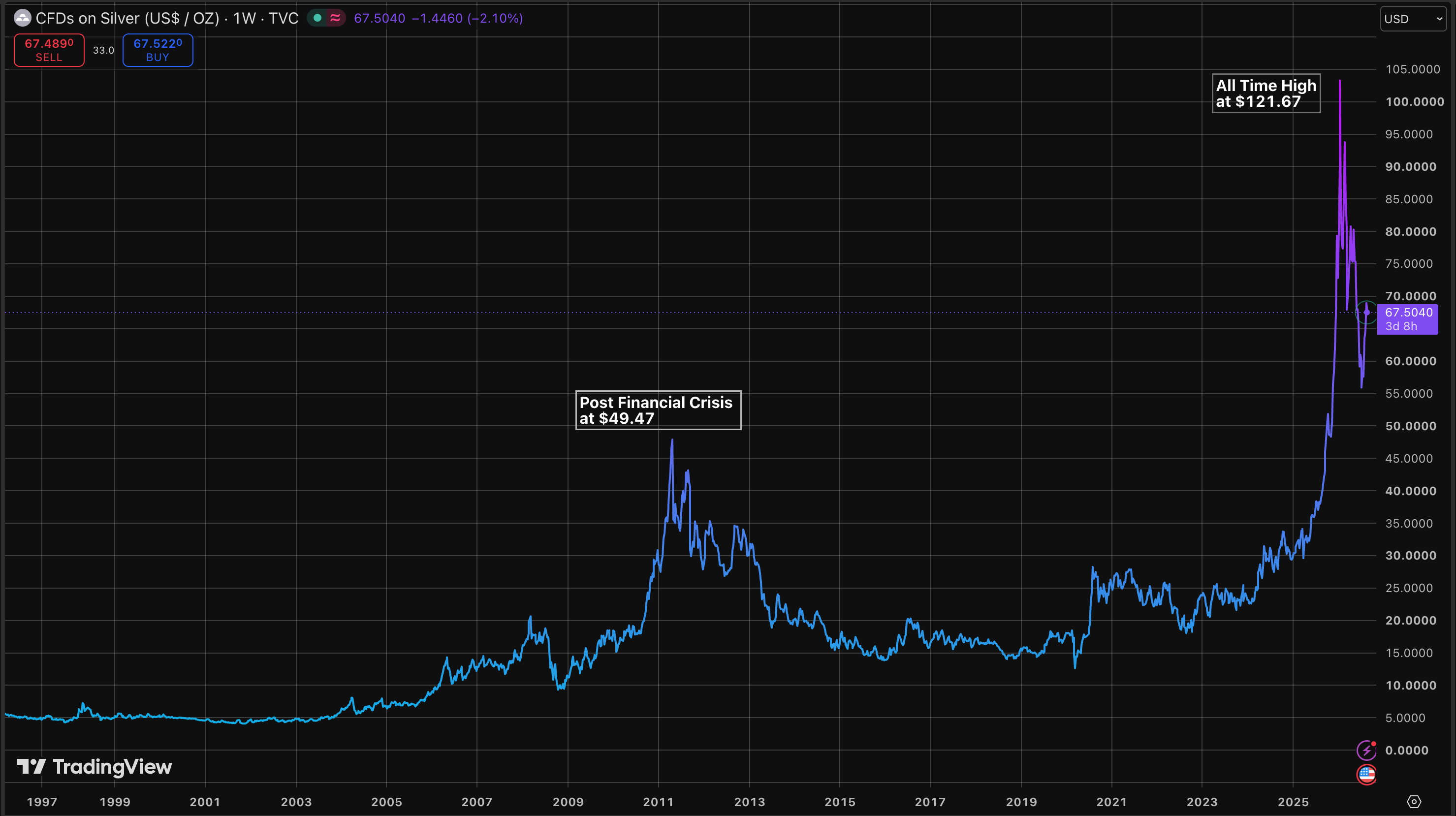
When silver moved vertically higher, decades of price-sensitive metal suddenly became economical to sell. Jewelry, silverware, investment holdings and other scrap flowed back toward refiners. Recycling reached 197.6 million ounces in 2025, the highest level in 13 years, and the Silver Institute expects another 7% increase this year to roughly 211 million ounces. More interestingly, the flow became large enough to create refinery bottlenecks: some refiners extended settlement times and temporarily stopped accepting certain types of scrap. I would therefore describe the past several months as a supply-reset phase. The spike pulled dormant inventory into the market; the correction gave the system time to process and absorb it.
Higher prices have already produced a substantial supply response, while industrial demand is simultaneously being softened by silver thrifting and substitution, particularly in solar. Yet the market is still projected to run a sixth consecutive annual deficit in 2026.
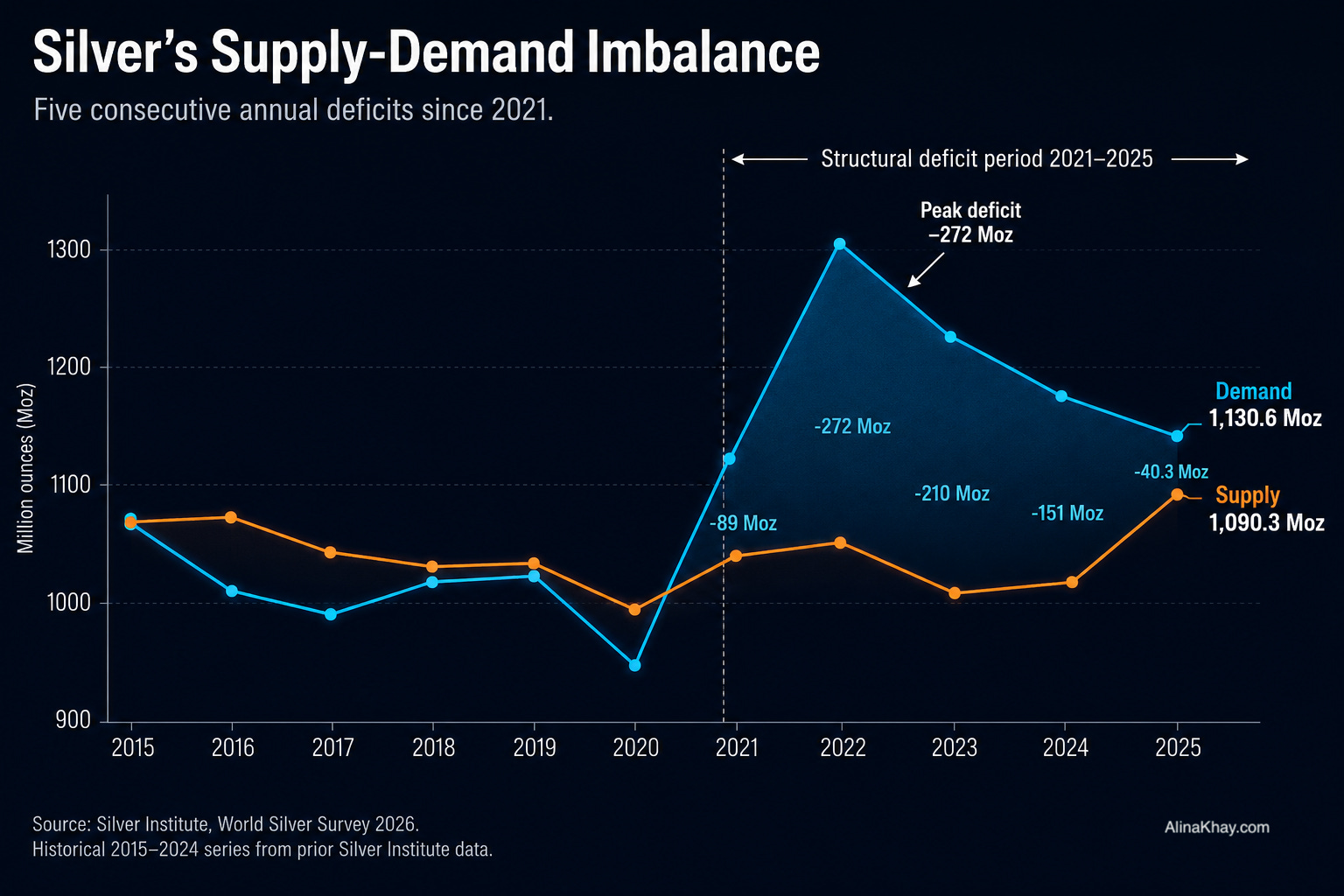
This is why I find the current setup more interesting than the January squeeze itself. The first move was driven by scarcity recognition. Then came speculative acceleration and overshoot. What followed was supply mobilisation - exactly the mechanism markets use to respond to scarcity. Silver may now be entering the next phase: finding the price at which new supply, recycling and existing inventories can actually balance persistent demand. If that equilibrium exists near current levels, silver can spend a long time consolidating. If the market discovers that the supply response is still insufficient, the next repricing could become considerably more important than the first.
***
There are already small signs that silver is evolving as a financial market as well. CME will extend 24/7 trading to its new 100-ounce Silver futures contract from September 11, pending regulatory review, after seeing strong participation in its smaller gold contract. The product is financially settled against benchmark COMEX silver and has already averaged around 17,800 contracts a day during the first half of 2026. It is not a bullish signal by itself. But it is another indication that precious metals are becoming more continuously accessible macro assets, with a larger retail and global investor base able to react to news outside traditional market hours.
The market has already absorbed the price shock, the speculative overshoot and a major supply response. Yet structural tightness remains.
That leaves the real question:
If higher prices have already pulled more silver into the market - and supply still cannot fully close the gap - how high does price need to go to restore balance?
— Alina Khay
This is a research note and a record of my own market thinking, not investment advice or a personal recommendation. Nothing here considers your objectives, financial situation, or risk tolerance. Markets can move against this view; use your own judgment and seek professional advice where appropriate.
I completely agree - it’s set to have another incredible run along with Gold and Copper. Silver seems to react with more leverage though so higher upside.
I hope you are right.